Why Is My Dementia Mom Scared of the Shower?
And What You Can Do About It
A practical, step-by-step guide to transform shower time from a daily battle into a calm, dignified routine, without expensive renovations or forcing anything.
I used to dread every shower day.
She'd grab the doorframe and tense up before I even turned on the water.
I tried being patient.
I tried being firm.
Nothing worked.
I felt like I was failing at the one thing that mattered most... keeping her safe, clean, and comfortable without taking away her dignity.
Does This Sound Familiar?
You love your mom. You're doing your best. But every time shower day rolls around, your stomach knots up.
You know hygiene matters.
You see the skin issues developing.
But the moment you mention the bathroom,
This is what happens...
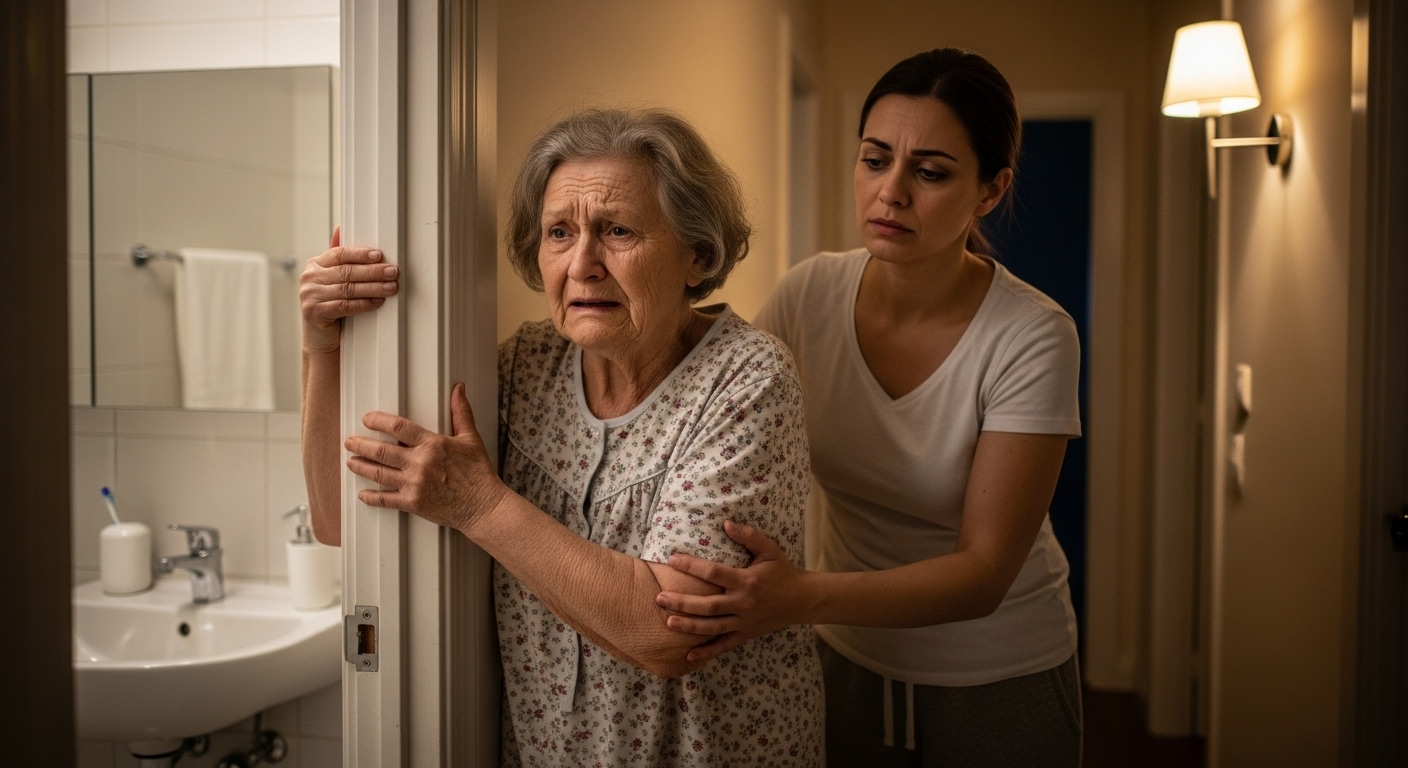
She tenses up and clutches her robe
She says "no" before you even start
She pushes your hands away or tries to leave
She gets upset in ways that break your heart
So you end up in this impossible cycle:
Dreading "the conversation" hours before you even try
Feeling like the bad guy when you know you're just trying to help
Second-guessing everything
("Am I too pushy? Too gentle? What am I doing wrong?")
Carrying guilt that weighs on you throughout the day
Worrying constantly about infections, odor, and what happens if this keeps getting worse
You try to be patient.
You try to understand.
But when she starts crying or pushing you away, you don't know what to do next.
And here's what no one tells you:
It's not your fault.
And it's not hers either.
After months of struggles,
I discovered something that changed everything.
After consulting with dementia care specialists, talking with dozens of other family caregivers, and months of trial and error with my own mom,
I uncovered something crucial
The problem isn't your mom being difficult.
It's not you being a "bad" caregiver.
It's the shower itself.
Most bathrooms—even in loving homes—are unknowingly designed in ways that make someone with dementia feel unsafe.
Here's what I learned:
The sound of running water hits 70-90 decibels—as loud as a vacuum cleaner running right next to your head.
Bright white tiles and harsh lighting create blinding glare that makes it hard to see where the floor is.
Temperature changes feel like sudden attacks to a brain that can
no longer regulate sensation properly.
Slippery floors trigger real fear of falling—because the risk is real.
And being undressed under bright lights with someone hovering?
That feels like losing control of one
of the last things she can control...
her dignity.
Once I understood WHY traditional approaches fail, I could finally create something that actually works.
After mastering this approach with my own Mom, I created this step-by-step guide to help other family Dementia caregivers.
By redesigning the bathroom experience around how your mom's brain processes everything now,
I was able to:
✓ Cut refusals dramatically... from constant battles to cooperation most days
✓ Reduce panic moments... she could actually relax instead of bracing for danger
✓ Preserve her dignity completely... no more feeling like I was forcing her
✓ Keep costs minimal...
no renovation, no expensive equipment
✓ Create a repeatable routine...
that works on good days AND challenging days
After helping dozens of other family caregivers use this same approach, I've refined it into a clear, practical method that anyone can follow...
even if nothing else has worked before.
"We went from total refusal to her asking 'is it cozy time?' We couldn't believe the change"
Rita, daughter caring for 79-year-old mom with Alzheimer's
"I was ready to give up and just do sponge baths forever. This guide showed me exactly where I was going wrong"
Marcus, son caring for 84-year-old mom with vascular dementia
"The scripts alone were worth it. I finally knew what to SAY. And the 10-minute routine? Game changer. We both actually look forward to it now."
Ana, daughter caring for 82-year-old mom with dementia
Here's Everything You Get With The Complete Gentle Shower Guide!
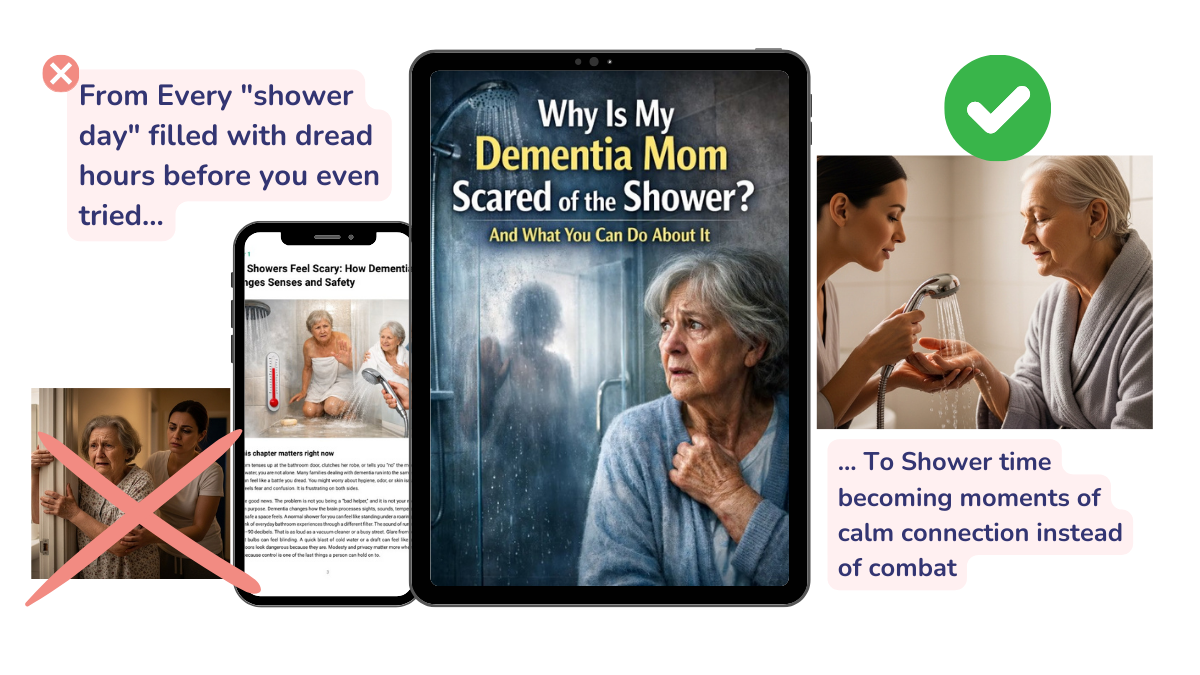
What's included:
The Complete 45-Page
Step-by-Step System you can
Print or read on any device
Four practical chapters that solve shower resistance and restore
calm bathing routines
Chapter 1: Why Showers Feel Scary
Understanding How Dementia Changes Senses and Safety.
Discover exactly why a "normal" bathroom feels overwhelming to someone with dementia—and why this matters more than any technique you try.
You'll learn:
How sound, light, temperature, and balance perception change with dementia
The 5-minute bathroom scan that reveals your mom's specific triggers
Three simple questions that uncover the real problem (not what you think it is)
Why modesty and control matter more than you realize
Without understanding this foundation, you'll keep facing resistance no matter how patient you are.
Chapter 2: Make the Bathroom Feel Safe
Simple, Low-Cost Fixes You Can Do This Week
Transform your bathroom into a space that feels warm, stable, and predictable, without renovation.
You'll get:
The two "magic numbers" for room and water temperature that stop cold shock
Exactly which items make the biggest difference
(and which expensive ones to skip)
How to eliminate the three biggest fear triggers: noise, glare, and slippery surfaces
A 10-minute prep routine you can copy every time for consistency
Complete shopping lists at three budget levels:
under $100, $150-$200, and $300
Without these environmental changes, even perfect words and techniques will fail.
Chapter 3: The Gentle Shower Plan
Scripts, Routines, and a 10-Minute Step-by-Step
A time-stamped routine that takes the guessing out of every shower.
You'll learn:
The exact 10-minute sequence: what to do minute-by-minute
Word-for-word scripts you can copy (short, calming phrases that actually work)
How to use hand-over-hand cueing without taking over
The "Count and Pause" rhythm that prevents overwhelm
Calm alternatives for tough days
(10-minute sponge bath plan included)
How to build a weekly rhythm that reduces pushback over time
Without this predictable structure, every shower feels like starting from scratch.
Chapter 4: When It's Still Hard
Troubleshooting, Tracking Progress, and Getting Extra Help
Real-world solutions for when the routine needs adjusting.
You'll get:
A simple one-page tracking log
(takes 2 minutes to fill out)
How to spot patterns and adjust what's not working
Troubleshooting guides for the most common issues: spray fear, temperature problems, visual confusion, pain
Medical red flags that need a doctor's attention
Exactly what to ask for from occupational therapy, home health, and paid caregivers
A real case study: how one family cut refusals from 5 to 2 per week
Without tracking and adjusting, you'll miss the small changes that make big differences.
Before This Approach
❌ Every shower day fills you with dread hours beforehand
❌ Your mom grabs doorframes, yells, or shuts down when water turns on
❌ You feel guilty, frustrated, and like you're failing at basic care
❌ Hygiene issues pile up, but forcing it feels cruel
❌ No one can tell you WHY she's scared or WHAT actually works
❌ You're exhausted from trying everything with zero results
After This Approach
✅ You know exactly what to prep, say, and do at each step
✅ Your mom sits calmly because the room feels safe and the routine is predictable
✅ Refusals drop dramatically—often by 50-70% within the first week
✅ She keeps her dignity with towel coverage, gentle touches, and real choices
✅ You understand her triggers and can adjust quickly when something feels off
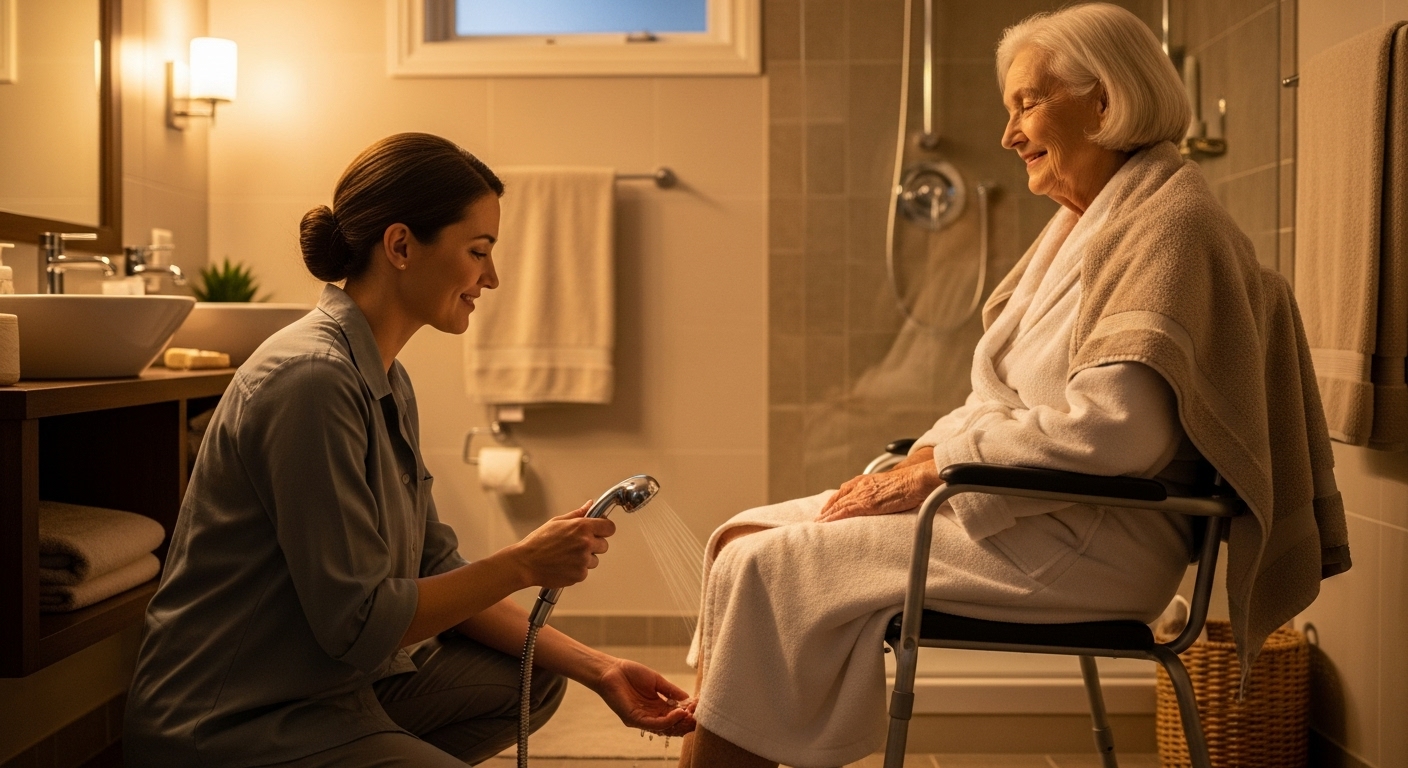
✅ Shower time becomes a moment of calm connection instead of combat
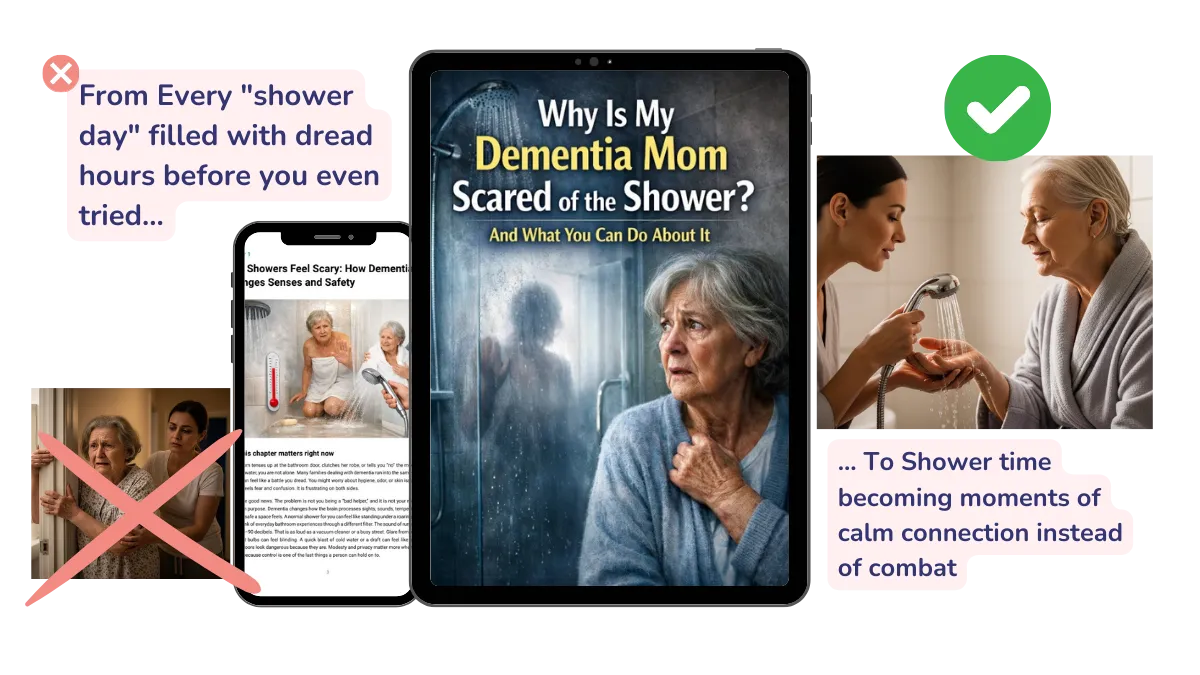
READY TO END THE SHOWER BATTLES?
What you're getting
45-page comprehensive guide
(instant PDF download)
4 detailed chapters with step-by-step instructions
Ready-to-use scripts and checklists
Shopping lists at three budget levels
Troubleshooting playbook for common problems
Real case studies with specific results
One-page tracking log template
Your investment: Just $7
That's less than:
One hour with a home care aide
A single occupational therapy co-pay
One overpriced "adaptive equipment" item that won't work
But this guide gives you a complete system you can use immediately and reference whenever you need it.
My 30-Day, 100% Money-Back Guarantee
I know what it's like to dread shower day.
The guilt when your mom is scared.
The worry about hygiene.
The feeling that you're failing at something that should be simple.
That's exactly why I created this guide...
to give you a clear, kind, proven approach that works even when nothing else has.
Here's my promise:
Try this system for 30 full days.
If you don't see calmer showers, fewer refusals, or at least one major breakthrough that makes bath time easier,
just send me an email.
I'll refund every cent.
No questions asked.
No hoops to jump through.
You deserve tools that actually help, not more stress.
QUESTIONS?
Q: Will this work if my mom has advanced dementia?
A: This system works across dementia stages because it focuses on environment and sensory experience, not memory or reasoning.
The techniques in Chapters 1 and 2 are especially powerful for advanced stages.
That said, every person is different, which is why tracking (Chapter 4) helps you adapt to your specific situation.
Q: What if we've already tried everything?
A: Most families haven't tried the environmental changes in Chapter 2 because they don't realize how much sensory processing changes with dementia.
The combination of room warmth, softer lighting, noise reduction, and shower rose type often works when "being more patient" or "explaining better" hasn't.
You'll also get troubleshooting tools to identify what you haven't tried yet.
Q: Do I need to buy expensive equipment?
A: No. Many families see significant improvement with under $100 in simple items: a handheld shower head ($25-45), non-slip mat ($15-25), shower chair with arms ($40-90), and warmer light bulbs ($10-20).
Chapter 2 gives you shopping lists at three budget levels so you can start where you are.
Q: How quickly will I see results?
A: Many caregivers notice calmer behavior within the first few attempts, sometimes in the first week, once they implement the environmental changes and predictable routine.
However, dementia care involves ongoing adaptation. This guide gives you the foundation and the troubleshooting tools to keep improving over time.
Q: What if my mom refuses to even enter the bathroom?
A: Chapter 3 includes scripts for the "invite" phase and a Plan B section for tough days (10-minute seated sponge bath alternative).
Chapter 4 helps you track patterns to discover if timing, pain, or specific triggers are driving the refusal.
The goal isn't to force compliance—it's to make the bathroom feel safe enough that she's willing to try.
Q: Is this a physical book or digital?
A: This is a digital PDF guide (45 pages) that you download instantly after purchase. You can read it on any device, print it out, or both. No shipping delays—you get access immediately.
Q: What if I need help implementing this?
A: The guide includes step-by-step instructions, word-for-word scripts, and checklists designed for family caregivers with no special training. Chapter 4 also tells you exactly when and how to ask for professional help (OT, PT, home health) if you need additional support.
Ready to End the Shower Battles?
While other caregivers continue dreading bath day and feeling like failures, you'll have a clear, tested system for creating calm, dignified shower routines.
What you get immediately:
Complete 45-page guide
(instant PDF download)
Step-by-step instructions for
all four chapters
Scripts, checklists, and shopping lists
Troubleshooting playbook
30-day money-back guarantee
Your investment: ONLY $17